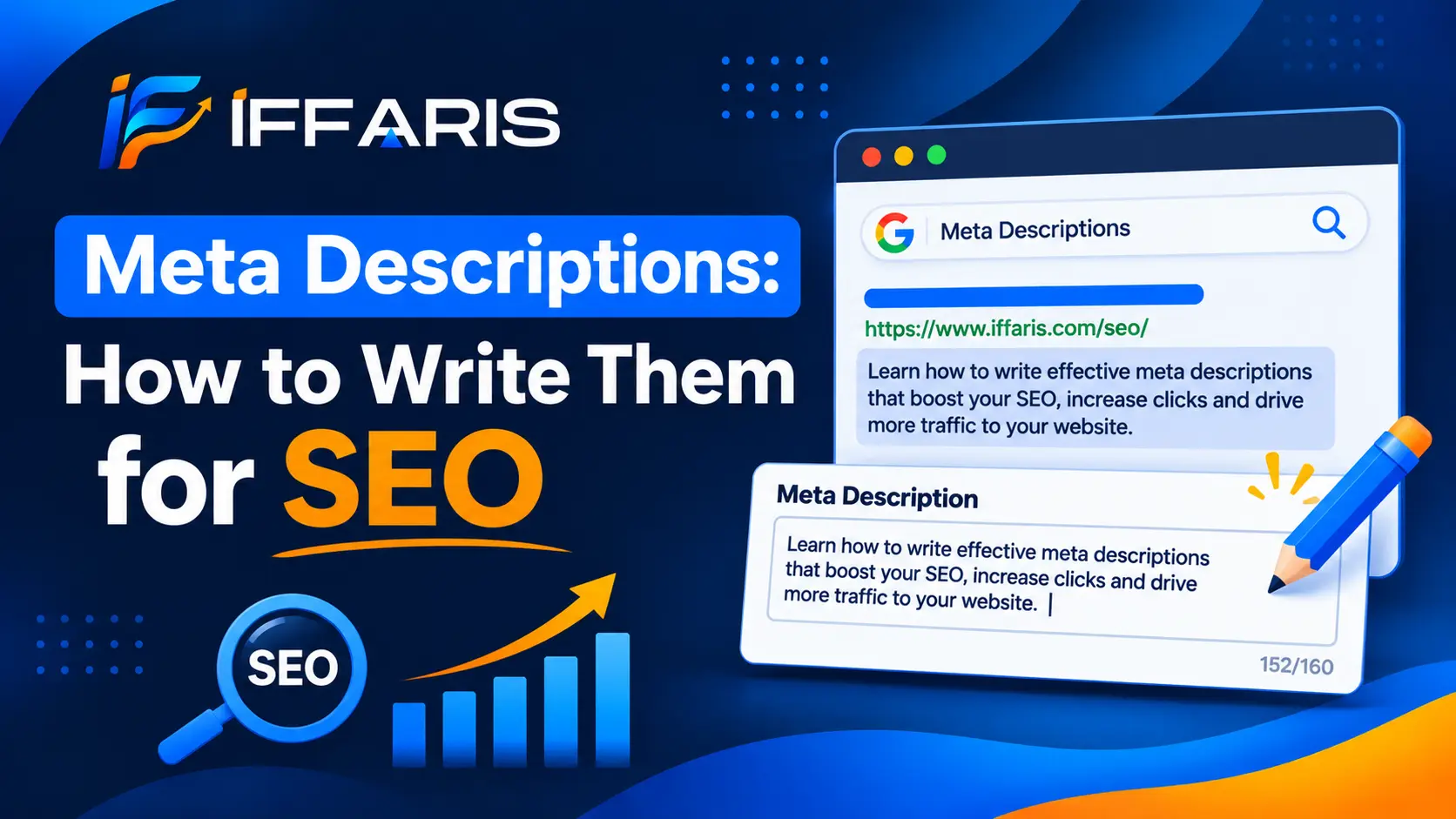
You can rank on page one and still lose the click. Two results can sit side by side on Google, with similar positions and similar titles, yet one gets far more visitors. Very often, the difference is the short snippet of text under the title. That snippet is your meta description, and getting meta description SEO right is one of the fastest ways to win more traffic from rankings you already have.
Many site owners treat meta descriptions as a box to tick. They leave them blank, copy the first sentence of the page, or paste the same text across dozens of URLs. Others obsess over exact character counts without asking what actually makes a searcher click. This guide fixes both problems and gives you a practical meta description SEO framework. You will learn what a meta description does, how Google treats it, how long it should be and, most importantly, how to write descriptions that persuade real people.
By the end, you will have a repeatable meta description SEO process, tested formulas, practical examples for different page types and a checklist you can use on every page you publish.
What Is a Meta Description?
A meta description is an HTML tag that summarises the content of a web page. It lives in the head section of the page’s code and looks like this:
<meta name="description" content="Your summary of the page goes here.">
Search engines often display this text beneath the page title in search results. It is not visible on the page itself. Think of it as an advertisement for the page: a short pitch that tells searchers what they will find and why they should click your result instead of the others. Every effective meta description SEO plan starts from that idea.
Together, the title tag, URL and meta description make up your search snippet. The title grabs attention, the URL builds trust and the description closes the deal. Good meta description SEO makes all three work together.
Do Meta Descriptions Help SEO?
This is one of the most common questions, and the honest answer has two parts.
They are not a direct ranking factor. Google has stated that the meta description does not directly influence rankings. Adding keywords to it will not push your page up the results by itself.
They strongly influence clicks. A compelling description can raise your click-through rate, which means more visitors from the same position. More clicks mean more traffic, more leads and, in many cases, stronger engagement signals. That is why meta description SEO is still worth your time, even though it is not a ranking lever in the traditional sense.
There is also an indirect benefit of good meta description SEO. When a description accurately describes the page, visitors who click are more likely to find what they wanted. That reduces quick exits and improves the overall experience. For the bigger picture of on-page factors, see our on-page SEO checklist.
How Google Treats Meta Descriptions
Understanding Google’s behaviour saves you from frustration when you practise meta description SEO. Writing a perfect description does not guarantee that Google will show it.
Google often rewrites snippets. If Google believes another part of your page answers a search query better than your written description, it may pull text from the page instead. This is especially common for long-tail queries and pages with plenty of content. A strong meta description SEO strategy accepts this and focuses on matching the most likely search intent.
Your description is more likely to appear when it fits the query. A description that clearly addresses the main topic and search intent has a better chance of being used.
Query words are often highlighted. When a searcher’s words appear in the snippet, Google usually bolds them, which makes the result stand out. Including your main phrase naturally can help.
Missing descriptions get auto-generated. If you leave the field blank, Google chooses text for you. Sometimes it works, but often it produces awkward, incomplete snippets. Writing your own gives you control over at least the default.
Treat meta description SEO as your best offer, not a guarantee. Write them carefully for your priority pages and monitor the results.
Ideal Meta Description Length
Length causes more confusion than any other part of meta description SEO. Google truncates snippets based on pixel width, not a fixed number of characters, so there is no perfect number. As a practical guideline:
- Aim for roughly 150 to 160 characters for desktop
- Put the most important information in the first 100 to 120 characters, because mobile snippets can be shorter
- Avoid going far beyond 160 characters, since the end may be cut off with an ellipsis
Do not panic over a few characters. A clear 140-character description that makes people click is better than a stuffed 160-character one that reads awkwardly. That principle sits at the heart of meta description SEO. Use a preview tool to see how your text might look. Our partner site offers a free SERP preview tool that helps you check length and appearance before you publish.
How to Write Meta Descriptions That Get Clicks
Now to the core of meta description SEO: writing. Follow this step-by-step process.
Step 1: Understand the Search Intent
Before writing a word, ask what the searcher wants. Are they looking for information, comparing options, or ready to buy or call? A person searching “how to fix a leaking tap” wants instructions. A person searching “emergency plumber near me” wants speed and availability. Your description should reflect that intent.
If you are unsure, review the live results and see how competitors position their pages. Good keyword research makes this easier, and our guide to keyword research explains how to identify intent behind each phrase. Intent is the foundation of meta description SEO.
Step 2: Include Your Main Keyword Naturally
Place your primary keyword in the description, ideally near the beginning. It reassures searchers that the page matches their query and may get highlighted in the results. Write it naturally. Stuffing several variations into 155 characters makes the text look spammy and can reduce clicks. Strong meta description SEO uses the main phrase once, perhaps with a close variation.
Step 3: Lead With the Benefit
Tell people what they will gain. Do not describe the page, describe the outcome. “Learn how to write descriptions that raise click-through rates” is stronger than “This page is about meta descriptions.” Benefits answer the silent question every searcher asks: what is in it for me? This is where meta description SEO becomes persuasion rather than description.
Step 4: Add a Reason to Click
Give searchers something specific. This could be a number, a free resource, a guarantee, a time frame or a unique angle. Examples include “12 examples,” “step-by-step checklist,” “free quote” or “same-day service.” Specifics beat vague claims every time.
Step 5: Use a Call to Action
A short action phrase nudges people to click. Verbs such as learn, discover, get, compare, book, call and see work well. Match the action to the page: informational pages suit “learn” or “discover,” while service pages suit “get a free quote” or “book today.”
Step 6: Keep It Accurate and Honest
Your description must reflect the page. Misleading descriptions may earn a click, but visitors who feel tricked leave immediately, which hurts your credibility and conversions. Good meta description SEO sets honest expectations and then delivers on them.
Step 7: Make It Unique
Every page needs its own description. Duplicate descriptions waste the chance to differentiate pages and make your results look repetitive. If you have hundreds of pages, prioritise your most valuable and highest-traffic URLs first. Uniqueness is a basic rule of meta description SEO.
Step 8: Edit for Length and Clarity
Write a first draft, then trim it. Remove filler words, shorten phrases and make sure the key message appears early. Read it aloud. If it sounds like something a real person would say, you are on the right track. Clean editing is the last stage of meta description SEO writing.
Proven Meta Description Formulas
Formulas speed up writing and keep your quality consistent. Here are several you can adapt.
The benefit plus keyword formula. “[Main keyword]: [benefit or outcome]. [Specific proof or detail]. [Call to action].”
Example: “Meta description SEO made simple: learn formulas that boost clicks, with examples for every page type. Start writing better snippets today.”
The question and answer formula. Ask the question searchers have, then promise the answer.
Example: “Not sure how long a meta description should be? Get the ideal length, real examples and a quick checklist for better snippets.”
The problem and solution formula. Describe the pain, then offer the fix.
Example: “Low click-through rate despite good rankings? Fix it with clear, benefit-led meta descriptions that match what searchers want.”
The list or number formula. Numbers add specificity and set expectations.
Example: “7 meta description templates you can copy today, plus common mistakes that cost you clicks.”
The service plus location formula. Ideal for local businesses.
Example: “Licensed electricians serving Orange County. Panel upgrades, EV chargers and rewiring with upfront pricing. Call for a free quote.”
The offer or urgency formula. Use only if it is true and current.
Example: “Same-day appliance repair in Los Angeles. Certified technicians, honest pricing and a warranty on every job. Book online now.”
You do not need to use a formula every time, but having a few in your toolkit makes meta description SEO faster and less stressful.
Meta Description Examples: Weak vs Strong
Looking at before-and-after versions helps you see what good meta description SEO looks like in practice.
Blog Post
Weak: “This article talks about internal links and how they are used in SEO and websites.”
Strong: “Learn how internal links pass authority, help Google crawl your site and guide visitors. Includes a step-by-step strategy and checklist.”
The strong version names specific benefits, includes the topic and promises tools the reader can use.
Local Service Page
Weak: “Welcome to our plumbing company. We are the best plumbers and we offer many plumbing services.”
Strong: “Fast, licensed plumbers for leaks, drains and water heaters in Los Angeles. Upfront quotes and same-day appointments. Call now.”
The strong version includes services, location, differentiators and a clear action.
Product or Category Page
Weak: “Buy products online. We have many items at low prices.”
Strong: “Shop durable work boots in sizes 6 to 15, with free shipping over $75 and easy 30-day returns. Find your perfect fit today.”
The strong version gives concrete details a buyer cares about.
Homepage
Weak: “Home page of our company website.”
Strong: “We design fast, SEO-ready WordPress websites for local businesses. See our work and request a free quote.”
A homepage description should explain who you serve and what you do in one line.
These examples show that effective meta description SEO is less about clever words and more about clarity, specificity and relevance.
Meta Description SEO for Different Page Types
Different pages need different meta description SEO approaches.
Blog posts. Focus on the question answered or the value gained. Mention formats that stand out, such as checklists, templates, examples or step-by-step guides.
Service pages. Lead with the service and location, then add trust signals such as licensing, experience, reviews or guarantees. Close with a call to action. If you want help planning pages like these, our local SEO services page explains how we approach it.
Location pages. Include the area name naturally, mention the services offered there and avoid repeating the same wording across every location.
Product pages. Highlight key features, price range, shipping or return benefits and availability.
Category pages. Describe the range of products and the main reasons to shop with you.
Homepage. Summarise your business, audience and main benefit clearly.
Pages that should not rank. Thank-you pages, internal search results and similar pages rarely need optimised descriptions, but they may need noindex tags, which is a technical decision. Our technical SEO checklist covers those settings.
How to Add and Edit Meta Descriptions in WordPress
Most WordPress users manage meta description SEO through an SEO plugin. Popular options include Rank Math and Yoast SEO.
To edit a description:
- Open the post or page in the editor
- Scroll to the SEO panel below the content, or open the plugin sidebar
- Find the snippet preview or the meta description field
- Type your custom description
- Check the length indicator and preview
- Update the page
Plugins also support templates with variables, such as post title, site name or category. These are helpful as a fallback for large sites, but treat them as a safety net, not the final plan. Custom descriptions on important pages always outperform generic templates, and custom text on key pages is the stronger meta description SEO choice.
If you build pages with a theme or page builder, check that it does not output a second description tag, which can cause conflicts. Choose your SEO tools carefully, and see our guide on how to choose the right WordPress plugins before adding anything new.
For a quick way to generate the HTML tag for a static page, you can try the meta tag generator on our partner site.
Writing Meta Descriptions at Scale
When you manage a large website, hundreds of pages may need attention. You cannot write each one from scratch, so use a structured approach.
Prioritise by value. Start with pages that already get impressions in Google Search Console, pages that drive leads or sales and pages ranking in positions three to ten, where a better snippet can win more clicks.
Use templates for similar pages. Product pages and location pages can follow a consistent pattern with unique details inserted. Templates make meta description SEO scalable. Make sure each description still differs from the others.
Use AI as a drafting assistant. AI tools can produce several options quickly. Give them the page topic, main keyword, audience and character limit, then edit the results. Always check for accuracy, uniqueness and natural wording. Our guide to AI SEO tools explains how to use these tools responsibly.
Review in batches. Work through a spreadsheet of URLs, current descriptions, character counts and new versions. Update in groups and track the results. Batch reviews keep meta description SEO manageable across big sites.
Scaling does not mean lowering quality. The aim is a consistent meta description SEO process that frees your time for the pages that matter most.
How to Test and Measure Meta Description Performance
Writing is only half the work in meta description SEO. Measure whether your changes help.
Use Google Search Console
Open the performance report and look at click-through rate by page and query. Find pages with high impressions but low click-through compared with others in similar positions. These are your best candidates for rewriting. Our guide to the Google Search Console performance report shows how to filter and compare this data.
Compare Before and After
When you update a description, record the date and the old text. Wait a few weeks, then compare click-through rate for the same page and similar queries. Account for seasonality and changes in rankings so you do not credit or blame the wrong cause.
Test One Change at a Time
If you change the title, description and content together, you will not know which change worked. Where possible, change only the description for a clean test. Clean tests make meta description SEO decisions easier to trust.
Remember That Google May Rewrite
If your new description does not appear, check which snippet Google shows for your target queries. If Google keeps rewriting it, consider whether your page content answers the query clearly, and whether your description matches the intent.
Consistent testing turns meta description SEO from guesswork into a measurable improvement process.
Meta Description SEO Mistakes to Avoid
Most weak snippets share the same handful of meta description SEO problems.
Leaving the Description Blank
A blank field hands control to Google, which may choose awkward text. Fill in descriptions for all important pages.
Duplicating Descriptions Across Pages
Identical descriptions make pages look interchangeable and waste an opportunity. Each page deserves its own pitch.
Writing Too Long or Too Short
Overly long descriptions get cut off, and extremely short ones fail to persuade. Aim for the range given above.
Stuffing Keywords
Cramming in repeated phrases looks spammy and reads poorly. Use your main keyword naturally once or twice at most. Stuffing is the fastest way to ruin meta description SEO.
Using Clickbait or Misleading Claims
Promises that the page does not keep damage trust and increase bounce rates. Be honest.
Starting With Filler
Phrases like “This page is about” or “Welcome to our website” waste valuable space. Start with the benefit or the answer.
Ignoring Search Intent
A great description for the wrong intent will not perform. Check what searchers want before you write.
Forgetting Special Characters and Quotes
Some characters can break the HTML tag or display strangely. Avoid unnecessary double quotation marks in your text, and preview the result to be safe.
Never Updating Old Descriptions
Offers, prices and information change. Revisit descriptions on important pages, especially those with time-sensitive details. Regular refreshes keep meta description SEO current.
Avoiding these mistakes puts your meta description SEO ahead of most competitors, because so many sites still get the basics wrong.
Meta Title and Meta Description Working Together
Your title and description are a team. The title earns attention, and the description supports it with detail. They should not repeat each other. Smart meta description SEO avoids duplicating the title. If your title already states the main benefit, use the description to add proof, a unique angle or a call to action.
Keep your main keyword in both, but vary the wording so that they feel complementary. Check that the title tag stays within roughly 60 characters to avoid truncation. Treat both elements as part of one snippet strategy when planning meta description SEO for a page.
Local Businesses and Meta Description SEO
If you run a local service business, such as an electrician, plumber, appliance repair company or towing service, your snippet competes with local packs, map listings and ads. A strong description can make the difference between a call and a lost customer, which is why local meta description SEO deserves care.
Focus on what local customers care about:
- Service area and response time
- Licences, insurance and guarantees
- Pricing clarity, such as free estimates
- Availability, such as same-day or 24/7 service
- A direct call to action, such as call or book now
Keep wording natural and specific to each page. If you want expert help improving how your business appears in search, you can explore our SEO services, and for a full website health review you can try the SEO audit tool from our partner site.
Meta Description SEO Checklist
Use this list before publishing or updating any page:
- The description is unique to the page
- It is about 150 to 160 characters, with the key message first
- It includes the main keyword naturally
- It states a clear benefit or answer
- It includes a specific reason to click
- It ends with a suitable call to action
- It accurately reflects the page content
- It avoids filler, stuffing and clickbait
- It matches the search intent of the target query
- You have previewed how it appears on desktop and mobile
- You have recorded the date and plan to review the results
Final Thoughts
Meta description SEO will never be the most glamorous part of search optimisation, but they are among the most practical. They do not move rankings directly. They do help you earn more visits from the rankings you already have, and that is often the quickest return on effort available.
Start with your most important pages. Find the ones with strong impressions but weak click-through, rewrite their descriptions using the formulas above and measure the effect. Then build good habits so that every new page ships with a clear, specific, honest description. Treat meta description SEO as an ongoing process, not a one-time task, and your results will compound over time.
Frequently Asked Questions About Meta Description SEO
Is a meta description a ranking factor?
No, Google has said that meta descriptions are not a direct ranking factor. However, they affect click-through rate, which influences how much traffic you earn from your rankings. That is why meta description SEO still deserves attention.
How long should a meta description be?
A good guideline is 150 to 160 characters, with the most important details placed in the first 100 to 120 characters. Google truncates by pixel width, so treat the numbers as guidance rather than a strict rule.
Does Google always use my meta description?
No. Google often replaces it with text from the page if it thinks another passage answers the query better. You can improve your chances by writing a description that clearly matches the topic and intent of the page. That is a normal part of meta description SEO.
Should I include my keyword in the meta description?
Yes, include your main keyword naturally, preferably near the start. It helps searchers see the relevance of your result, and it may be bolded in the snippet. Avoid repeating it unnaturally.
What happens if I do not write a meta description?
Google will generate one from your page content. Sometimes this works acceptably, but the result can be incomplete or unattractive. Writing your own gives you more control over how your page is presented. It is the simplest meta description SEO win available.
Can I use the same meta description on multiple pages?
You should not. Duplicate descriptions make pages less distinctive and waste an opportunity to appeal to different searchers. Write unique descriptions, starting with your most important pages. Uniqueness is the first rule of meta description SEO.
How often should I update my meta descriptions?
Review them whenever you update a page, change an offer or notice low click-through in Search Console. For key pages, a quarterly review is a sensible routine for keeping meta description SEO fresh and effective.