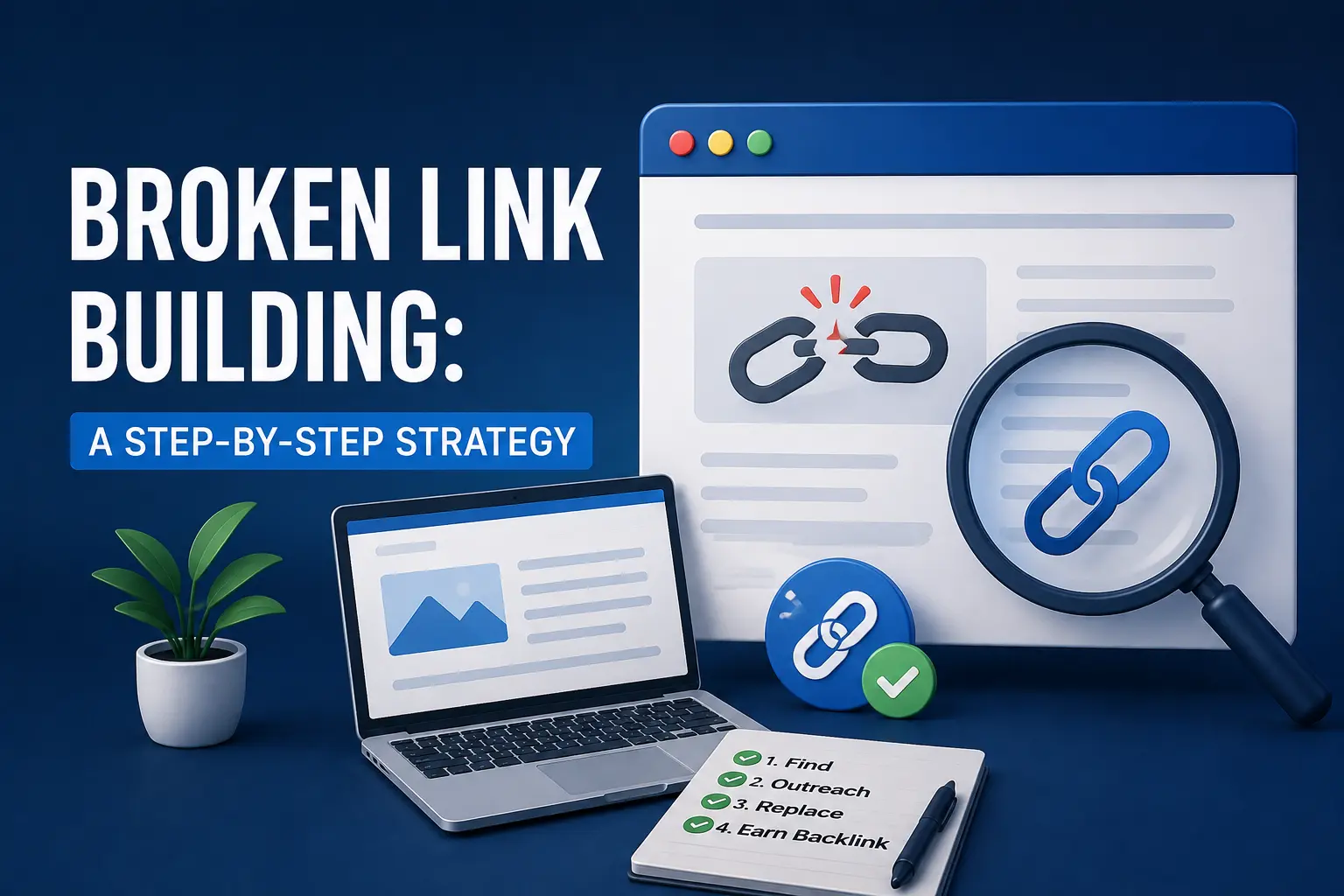
If you have spent any real time in the link building world, you have probably heard the term “broken link building” thrown around as one of the most effective, white-hat ways to earn backlinks in 2026. Unlike guest posting or paid placements, broken link building relies on a simple truth about the internet: websites die, pages move, content gets deleted, and links break. Every dead link on the web is a small opportunity waiting for someone to fix it — and that someone can be you.
In this guide, we are going to break down broken link building from the ground up. You will learn exactly what it is, why it still works so well, and how to execute a full campaign step by step, from finding dead links to writing outreach emails that actually get replies. Whether you are an SEO beginner or a seasoned link builder looking to refine your process, this guide will give you a repeatable framework you can use again and again.
What Is Broken Link Building?
Broken link building is a link acquisition strategy where you find broken (dead or 404) links on other websites, create or identify a piece of content on your own site that could replace what was lost, and then reach out to the site owner suggesting they swap in a link to your resource. It is a win-win: the website owner fixes an issue that was hurting their user experience and SEO, and you earn a relevant, contextual backlink in return.
The core appeal of broken link building is that you are not asking someone for a favor out of nowhere. You are pointing out a real problem on their site — a dead link is bad for both their visitors and their own rankings — and offering a genuine solution. This is why it tends to have higher acceptance rates than cold guest post pitches or generic link requests.
The tactic has been a staple of SEO for over a decade, and it remains relevant because the underlying problem it solves — link rot — is not going away. Studies on link decay consistently show that a meaningful percentage of pages linked to from older content eventually disappear or move, which means fresh opportunities are constantly being created, even on well-maintained websites.
Who Should Use This Strategy?
Almost any website with a content marketing arm can benefit from broken link building, but it tends to work especially well for:
- SEO agencies and freelancers looking for scalable, white-hat link acquisition methods for clients.
- Bloggers and publishers who already have in-depth guides, statistics pages, or tools that can serve as natural replacements.
- SaaS and e-commerce brands with resource libraries, comparison pages, or how-to content.
- Niche authority sites in education, finance, health, and technology, where resource pages and outdated citations are common.
If your site has little to no existing content, you may need to invest in content creation first, since a successful campaign depends on having something genuinely useful to offer in place of the broken link.
Why Broken Link Building Still Works in 2026
Search engines like Google continue to value backlinks as a major ranking signal, and broken link building remains one of the most sustainable ways to earn them because it does not rely on gray-hat tricks or paid schemes. Here is why it continues to deliver results:
- It is genuinely helpful. You are not spamming anyone. The process starts with identifying a real issue (a dead link) and offering a real fix.
- It works across almost every niche. Whether you run a finance blog, a SaaS company, or a local service business, opportunities exist because every industry has resource pages, guides, and roundups filled with outbound links that eventually break.
- It scales. Once you build a repeatable workflow with the right tools and templates, you can run broken link building outreach across dozens or hundreds of prospects each month.
- The links tend to be high quality. Opportunities are usually found on resource pages, “best of” lists, and editorial content — the same kind of pages that tend to carry real authority.
- It builds relationships. A successful outreach email often opens the door to future collaboration, guest posting, or additional mentions down the line.
Broken Link Building vs Other Link Building Methods
Compared to guest posting, skyscraper content, or digital PR, broken link building has a distinct advantage: the prospect already has intent. They linked to a resource once because it was relevant to their content — the resource just disappeared. With broken link building, you are not trying to convince someone that your content deserves a spot on their page; you are showing them that the spot already exists and is currently empty. That is a much easier sell, which is exactly why so many SEOs treat broken link building as a cornerstone tactic in their outreach playbook.
That said, it is not a “set it and forget it” method. It requires research, quality content creation, and thoughtful outreach. Let’s get into the actual step-by-step process.
Step 1: Find the Right Resource Pages and Niche Websites
Before you can start any campaign, you need a list of target websites that are likely to have broken links relevant to your niche. The best places to look are:
- Resource pages — pages that compile “Top Tools,” “Best Guides,” or “Useful Links” on a specific topic.
- Roundup posts — articles listing multiple external sources, statistics, or case studies.
- Older blog posts — content published years ago is far more likely to contain outdated or dead links.
- .edu and .gov resource pages — these often have high authority and, because they are updated less frequently, tend to accumulate broken links over time.
To find these pages, use search operators like:
"keyword" + "resources"
"keyword" + "useful links"
"keyword" + inurl:links
"keyword" + "best of"
Building this initial prospect list is the foundation of any broken link building campaign. The more targeted and relevant your list, the more successful your outreach will be later on.
Step 2: Identify Broken Links on Those Pages
Once you have a list of potential target pages, the next step is scanning them for actual dead links. There are several tools that make this part of broken link building much faster:
- Check My Links (Chrome extension) — instantly highlights broken links on any page you’re viewing, making it one of the fastest manual tools available for broken link building research.
- Ahrefs’ Broken Link Checker — lets you analyze a domain’s backlink profile and surface pages with broken outbound or inbound links at scale, which is extremely useful for larger campaigns.
- Screaming Frog SEO Spider — a desktop crawler that can crawl an entire site and report every broken link it finds, useful when you want to research a specific competitor or authority site.
- Wayback Machine (archive.org) — once you find a dead link, use the Wayback Machine to see what the original page looked like. This tells you exactly what kind of content you need to recreate for your pitch to make sense.
A disciplined process usually involves crawling dozens of resource pages, filtering out irrelevant results, and keeping a spreadsheet of live prospects with columns for the broken URL, the original (archived) content, the page it was found on, and contact information.
Step 3: Create Content That’s Better Than What Was Lost
This is the step that separates amateur attempts from campaigns that actually convert. You cannot just email someone and say “hey, your link is broken, link to my homepage instead.” That is not broken link building — that is spam.
Instead, use the Wayback Machine snapshot to understand what the original content covered, then create a new piece on your own site that matches or exceeds that value. Effective replacement content should:
- Cover the same core topic as the original page, so the swap makes contextual sense.
- Be more comprehensive, current, or better designed than what was lost.
- Include updated statistics, examples, or visuals where relevant.
- Be genuinely useful on its own, not just built as “link bait” for the campaign.
If you already have a relevant page on your site, even better — you can skip straight to outreach. For example, if your research turns up a dead link related to marketing checklists, and you already maintain a marketing resources hub on your own site, you already have exactly what the pitch needs.
Step 4: Find the Right Contact
An outreach email sent to a generic “info@” inbox is far less likely to get a response than one sent directly to the content owner or site editor. To find the right contact:
- Check the “About,” “Contact,” or “Author” page of the site.
- Look up the author’s name plus “email” or “Twitter/X” to find a direct line of contact.
- Use email-finding tools like Hunter.io to locate verified addresses tied to the domain.
- For larger publications, look for an editorial or content team contact rather than a general sales inbox.
Personalization is one of the biggest levers in outreach success rates, and it starts with reaching the right person.
Step 5: Write an Outreach Email That Gets Replies
Your email should be short, specific, and genuinely helpful — not salesy. A strong template for broken link building outreach typically includes:
- A clear, specific mention of where the broken link is located (include the exact page URL).
- Confirmation of what the link was supposed to point to (this shows you did your homework).
- A brief, non-pushy suggestion that your resource could serve as a replacement.
- A link to your content so they can quickly evaluate it.
Here’s a simple framework you can adapt:
Subject: Quick heads-up — broken link on [Page Title]
Hi [Name],
I was reading through your article on [Topic] and noticed the link to [Original Resource] under the [Section Name] section is broken — it looks like the page has been taken down.
I actually put together a similar (and more current) resource on this exact topic: [Your URL]. Thought it might be a useful replacement if you’re updating the post.
Either way, just wanted to flag the broken link. Hope this helps!
Best, [Your Name]
Notice that this email leads with value (pointing out the broken link) rather than leading with the ask. This subtle framing dramatically improves response rates in most broken link building campaigns.
Step 6: Track, Follow Up, and Scale
Outreach rarely converts on the first email. Building a simple tracking spreadsheet with columns for prospect, broken link URL, contact info, date sent, follow-up date, and status will keep your campaign organized. A polite, one-line follow-up email one week later is often enough to push a fence-sitting reply into a “yes.”
As your broken link building process matures, you can scale it using outreach tools like Pitchbox, BuzzStream, or even a well-organized CRM, allowing you to run multiple campaigns across dozens of niches and prospects simultaneously without losing the personal touch that makes broken link building effective in the first place.
A Simple Broken Link Building Checklist
Use this quick checklist to keep every campaign on track:
- Compile a list of resource pages and roundups in your niche.
- Scan each page for dead or broken links using a checker tool.
- Verify each broken link with the Wayback Machine to see the original content.
- Confirm you have (or can create) a genuinely relevant replacement page.
- Find the correct contact for outreach.
- Send a short, personalized email flagging the broken link.
- Log the prospect, date, and status in a tracking sheet.
- Follow up once, politely, after 5–7 days.
- Update your own outbound links periodically so your site avoids the same problem.
Essential Tools for Broken Link Building
To summarize, here are the core tools most SEOs rely on for broken link building:
- Ahrefs / Semrush — for backlink analysis and identifying opportunities at scale.
- Check My Links — a free browser extension for quick, manual checks.
- Screaming Frog — for crawling entire websites to find broken links in bulk.
- Wayback Machine — to recover the content of pages that no longer exist, which is essential for building relevant replacement content.
- Hunter.io — for finding verified contact emails during outreach.
- Google Sheets or BuzzStream — for tracking every prospect from discovery to placement.
If you’re comparing these tools in more depth or looking for outreach and prospecting resources, you can check out further guides on Trade Scale Hub, which covers complementary strategies for scaling outreach-based growth tactics.
Common Mistakes to Avoid
Even experienced marketers make mistakes that hurt their broken link building results. Watch out for these:
- Sending generic, copy-paste emails. This approach only works when the outreach feels personal and specific to the page.
- Suggesting irrelevant replacement content. If your resource doesn’t genuinely match the original topic, don’t pitch it — it wastes everyone’s time and damages your credibility for future outreach.
- Ignoring domain quality. Not every dead link is worth pursuing. Prioritize opportunities on sites with real traffic and authority, not spammy or abandoned domains.
- Skipping the Wayback Machine step. Without understanding what the original content covered, your pitch will feel like a guess rather than a genuine fix.
- Giving up after one email. Most campaigns require at least one follow-up to convert.
- Treating it as a one-time project. The best results come from running broken link building as an ongoing, monthly part of your link acquisition strategy rather than a single sprint.
Broken Link Building Best Practices
To get the most out of every campaign, keep these best practices in mind:
- Focus on quality over quantity — ten well-targeted emails will outperform a hundred generic ones.
- Prioritize resource and roundup pages, since these tend to hold multiple broken links and higher topical relevance.
- Keep your outreach emails under 150 words; brevity respects the recipient’s time and improves reply rates.
- Always double-check that your suggested replacement page is genuinely useful, not just a thin page created solely to catch a link.
- Revisit your own site’s outbound links periodically too — this is a two-way street, and a site with no broken links of its own sets a better example when reaching out to others.
- Batch your research and outreach into weekly sessions so the process stays consistent instead of sporadic.
A Quick Example Walkthrough
Imagine you run a personal finance blog. While browsing a “Best Budgeting Resources” page on a mid-authority finance site, you notice a link labeled “Free Budgeting Template” that returns a 404 error. You check the Wayback Machine and see the original page offered a downloadable spreadsheet template with a short explainer video.
You already have a similar, more polished budgeting template on your own site, complete with an updated video walkthrough. You find the site editor’s email through the “Contact” page, then send a short note flagging the broken link and mentioning your resource as a possible replacement. Three days later, they reply, swap the link, and you’ve earned a relevant, high-authority backlink — all without spending a dollar on paid placement. That is the entire logic of broken link building in miniature, repeated at scale across dozens of prospects.
How to Measure Success
Track these metrics to evaluate how well your campaigns are performing:
- Response rate — the percentage of emails that get a reply.
- Conversion rate — the percentage of outreach emails that result in an actual link placement.
- Domain authority of acquired links — are your efforts landing links on genuinely valuable domains?
- Referral traffic — are the new links sending real visitors to your site?
- Time-to-placement — how long, on average, it takes from first outreach to a live, replaced link.
Reviewing these numbers regularly will help you refine your templates, prospect lists, and outreach cadence over time.
How Broken Link Building Fits Into a Wider Content Strategy
One thing many marketers overlook is that broken link building works best when it is tied to an ongoing content strategy rather than treated as an isolated outreach tactic. If your team is already publishing statistics roundups, in-depth guides, free tools, or templates, you already have a steady supply of assets that can be repurposed for broken link building outreach. On the other hand, if your site has thin or outdated content, broken link building becomes harder because you won’t have a strong replacement to offer.
A practical way to connect the two is to review your existing content library once a quarter and ask: “Which of these pages could realistically replace a dead resource in our niche?” This turns broken link building from a purely reactive tactic (finding a broken link, then scrambling to create content) into a proactive one, where you already know which pages are your best broken link building assets before you even start prospecting.
It also helps to think of broken link building as a feeder for other SEO efforts. The relationships you build during outreach often lead to future guest posting opportunities, newsletter mentions, or even long-term partnerships — meaning a single broken link building campaign can generate value well beyond the initial backlink.
Frequently Asked Questions
Is broken link building still effective in 2026? Yes. It remains one of the most sustainable white-hat link building strategies because link rot is a permanent feature of the web, and website owners genuinely want their broken links fixed.
How long does a campaign take to show results? Most campaigns take a few weeks to a few months to show meaningful results, depending on outreach volume, niche competitiveness, and follow-up consistency.
Do I need to create new content for every opportunity? Not always. If you already have relevant content on your site, you can pitch it directly. New content creation is only necessary when no suitable replacement already exists.
What’s a good response rate for broken link building outreach? Response rates vary by niche, but a well-targeted campaign with personalized emails typically sees response rates in the 5–15% range, with conversion to actual links somewhat lower.
Can broken link building hurt my SEO if done wrong? Not directly, but sending irrelevant or spammy pitches can damage your reputation with editors and reduce the chances of future outreach succeeding — so relevance and quality always matter more than volume.
Final Thoughts
Broken link building is one of the few SEO tactics that benefits everyone involved: the site owner gets a fixed link and a better user experience, and you earn a relevant, high-quality backlink. The process takes patience — finding dead links, creating genuinely useful replacement content, and writing thoughtful outreach emails — but the payoff is a sustainable, white-hat channel that keeps working month after month.
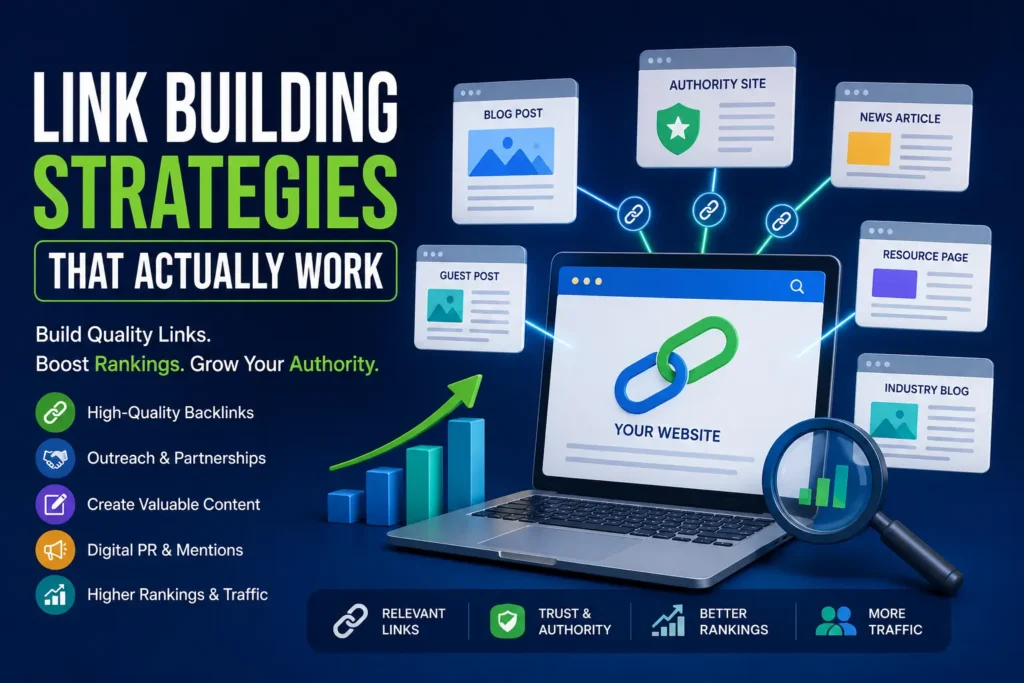
If you’re building out your broader link building strategy, broken link building pairs well with other methods like guest posting, digital PR, and resource page outreach. Treat it as one reliable piece of a diversified backlink profile rather than a one-time campaign, and you’ll find that broken link building continues to deliver quality links long after your first outreach email goes out.